Mangifera casturi: The Endangered Mango Every Collector Should Know
Few tropical fruit trees carry the same combination of botanical rarity, cultural history, and conservation significance as Mangifera casturi, commonly known as the kasturi mango.
Native to South Kalimantan on the island of Borneo, this mango relative has disappeared from the wild and survives through cultivation. As a result, every cultivated tree represents more than an unusual addition to a tropical garden. It also represents a living connection to a species that no longer has a known wild population.
For collectors interested in rare fruit trees, Mangifera casturi offers a particularly meaningful opportunity to grow something with both horticultural and conservation value.
A Mango That Survives Through Cultivation
Mangifera casturi is one of the most remarkable examples of a plant surviving outside its natural habitat.
The species is considered extinct in the wild, meaning conservation of existing cultivated material has become particularly important. Instead of naturally reproducing within its original forest habitat, the species now depends on people maintaining and propagating cultivated trees.
That makes cultivation especially meaningful.
By growing kasturi mango, collectors can help maintain living specimens of the species while also preserving an important part of South Kalimantan’s botanical heritage.
However, cultivation should not be confused with restoring the species to the wild. Conservation involves many additional considerations, including genetic diversity, provenance, habitat protection, and scientifically managed propagation.
What Makes Mangifera casturi Different?
At first glance, Mangifera casturi may look like another tropical mango tree. Its fruit, however, makes it immediately more distinctive.
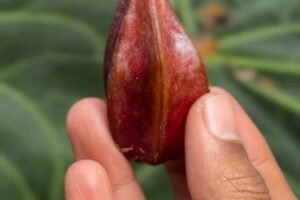
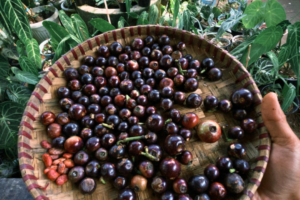
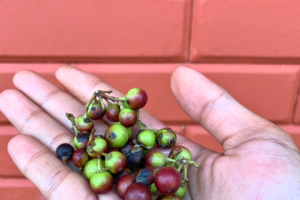
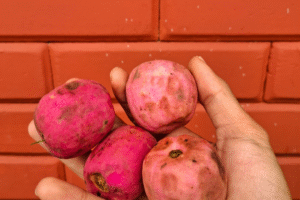
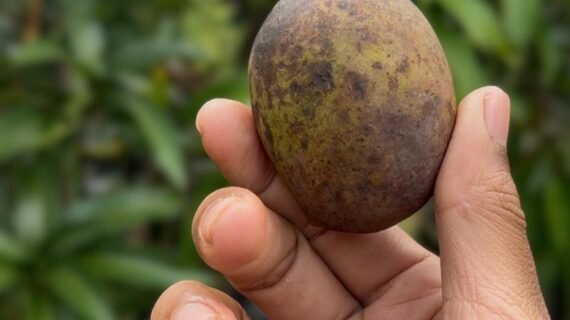
Kasturi mangoes are considerably smaller than many modern commercial mango cultivars. When ripe, the skin can develop a dark purple to almost black coloration, while the flesh has a characteristic aromatic quality.
The fruit’s strong fragrance is one of its most memorable features. For collectors accustomed to supermarket mangoes, tasting a genuine kasturi can be an entirely different experience.
The tree itself can also become a substantial tropical specimen when grown under suitable conditions, making it valuable both as a fruit tree and as a botanical collection plant.
A Fruit With Cultural Importance
Mangifera casturi is closely associated with South Kalimantan, where local communities have cultivated and valued it for generations.
This cultural connection adds another layer to the species’ importance. Kasturi is not simply an obscure mango found in botanical records; it forms part of the agricultural and cultural history of the region.
For collectors, growing a tree therefore provides an opportunity to preserve more than genetics. It also keeps a connection to a regional fruit tradition alive.
How to Grow Mangifera casturi
Like other tropical Mangifera, kasturi mango prefers warm growing conditions and good access to light.
Young seedlings can benefit from some protection from intense direct sunlight while they establish. Once the tree develops a stronger root system and canopy, it can gradually tolerate higher light levels and, in suitable tropical climates, full sun.
Soil and Drainage
Provide fertile, well-draining soil that retains enough moisture to support active growth without becoming permanently waterlogged.
Young trees benefit from consistent moisture, particularly during establishment. However, excessive moisture around the roots can create problems, especially in heavy or poorly drained soil.
Watering
Water regularly while the young tree is establishing, particularly during hot or dry periods.
As the tree becomes established, allow the soil to dry somewhat between thorough waterings rather than keeping it constantly saturated.
Light
Bright light supports strong growth and healthy foliage. Young plants can benefit from partial shade, while established trees generally perform well with much stronger light.
When moving a young plant from protected conditions into full sun, acclimatize it gradually to reduce the risk of leaf scorch.
Space
Remember that Mangifera casturi is a tree, not a compact container plant.
If you intend to grow it long term, provide enough horizontal and vertical space for the canopy to develop. Container cultivation may work for young specimens, but eventually a vigorous tree will benefit from considerably more root space.
Growing From Seed
For collectors, growing Mangifera casturi from seed offers a particularly rewarding experience.
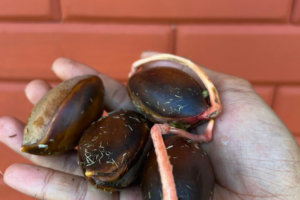
Fresh mango seeds can germinate relatively quickly under warm, moist conditions. However, seed viability can decline after prolonged storage, so freshness and proper handling are important.
Once the seed germinates, provide warmth, moisture, and bright filtered light while the young seedling establishes its root system.
Keep in mind that a seed-grown tree represents a genetically unique individual rather than a guaranteed clone of a particular cultivated tree. If preserving the exact characteristics of a named cultivar is the goal, vegetative propagation may be more appropriate.
Why Provenance Matters
With a species as rare as Mangifera casturi, knowing where your planting material comes from matters.
Unverified online listings can create problems because rare plant names are sometimes used incorrectly or attached to material with unclear origins. A collector may believe they are purchasing a rare species only to receive a common mango or a misidentified Mangifera.
Therefore, look for a seller that provides clear botanical identification and information about the origin and handling of the seed.
For international orders, proper export documentation also matters. Depending on the destination country and type of plant material, phytosanitary certificates or other import documentation may be required.
More Than a Rare Mango
Mangifera casturi represents an unusual intersection of horticulture, conservation, culture, and biodiversity.
Its disappearance from the wild makes every cultivated specimen more significant, while its distinctive fruit gives collectors a tangible reason to grow it. At the same time, cultivating the species encourages greater awareness of the remarkable diversity found among Southeast Asian mango relatives.
For a serious tropical fruit collector, few species tell a more compelling story.
Growing Mangifera casturi will not single-handedly restore the species to its natural habitat. Nevertheless, maintaining healthy cultivated trees helps keep the species present in living collections and creates opportunities for future propagation and conservation work.
View Mangifera casturi seeds and explore the opportunity to grow a living piece of Bornean botanical history in your own tropical collection.