Alocasia porteii Care Guide: How to Grow This Rare Giant Aroid Successfully
Introduction to Alocasia porteii
Few tropical plants command attention quite like Alocasia porteii. Known for its towering structure and deeply divided foliage, this species has become a centerpiece among collectors seeking bold, architectural plants.
Taxonomy and Botanical Classification
Alocasia porteii belongs to the family Araceae, a group of plants widely recognized for their unique inflorescence composed of a spathe and spadix. Within this family, Alocasia is a genus prized for dramatic foliage, and A. porteiistands among the most structurally impressive.
Origin and Discovery
Native to the tropical forests of the Philippines, Alocasia porteii thrives in warm, humid environments where filtered light and rich organic soils dominate. Its discovery traces back to early botanical exploration in Southeast Asia, where its unusual morphology immediately distinguished it from other aroids.
Botanical Significance
From a botanical perspective, Alocasia porteii is significant for its highly divided leaf structure—an adaptation that enhances light capture in dense forest understories. This makes it not only visually striking but also evolutionarily fascinating.
Why Alocasia porteii Is So Special
Rarity and Collector Value
In the world of Rare Houseplants Indonesia, Alocasia porteii is considered a high-value species. It is rarely mass-produced, and mature specimens are especially difficult to obtain. Collectors often search specialized sources like Rare Aroid Plants collections to find comparable species, but few match the scale and presence of this plant.
Its rarity also makes it a desirable addition for those building premium tropical collections, especially when sourced through a reputable Indonesian Plant Nursery.
Unique Morphology
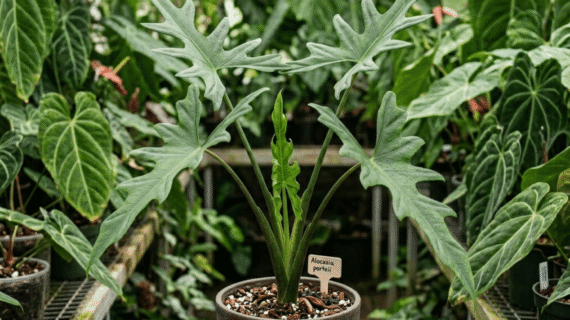
The most defining feature of Alocasia porteii is its deeply lobed leaves. Unlike typical Alocasia species with broad, shield-like foliage, this plant produces leaves that resemble a tropical palm—split into dramatic segments that radiate outward.
Its thick petioles support massive foliage, allowing the plant to grow several meters tall in ideal conditions. This tree-like growth habit gives it an almost prehistoric appearance.
Ecological Importance
In its natural habitat, Alocasia porteii contributes to rainforest biodiversity by providing shelter and maintaining humidity levels. Its large leaves help regulate microclimates, supporting surrounding plant and insect life.
Plant Structure and Growth Pattern
Vegetative Structure
Tuber System
At its base, Alocasia porteii develops a robust tuber that stores energy and water. This tuber allows the plant to survive periods of environmental stress and is essential for regeneration.
Collectors interested in propagation often explore similar options through Tubers Collection categories to understand how aroid tubers function and develop.
Petiole and Leaf Formation
The petioles are thick and fibrous, capable of supporting large, heavy leaves. As the plant matures, these petioles elongate significantly, elevating the foliage to create its signature towering form.
Leaf Morphology
Leaves are deeply divided into multiple lobes, with prominent veins and a slightly glossy texture. This structure maximizes light absorption while reducing resistance to airflow in humid environments.
Generative Structure
Spathe and Spadix
Like all members of Araceae, Alocasia porteii produces an inflorescence consisting of a spathe and spadix. The spathe encloses the spadix, protecting the reproductive organs.
Flower Zones
The spadix is divided into functional zones:
- Female flowers at the base
- Male flowers above
- A sterile appendix at the top
This arrangement encourages cross-pollination, typically facilitated by insects.
Lifecycle and Dormancy
The lifecycle of Alocasia porteii includes periods of active growth and dormancy. During favorable conditions, it produces large leaves and expands its tuber. Under stress—such as low temperature or reduced light—it may enter dormancy, retreating into its tuber until conditions improve.
How to Grow Alocasia porteii Successfully
Growing from Seed
Propagation from seed is possible but requires fresh, viable seeds. Many collectors source them from trusted suppliers offering Tropical Seeds For Sale or Rare Seeds Indonesia.
Seeds should be planted in a sterile, well-draining medium and kept in warm, humid conditions. The Seeds Collection of specialized nurseries often provides suitable options for those starting from scratch.
Germination can take several weeks, requiring patience and consistent environmental control.
Soil Mix (Detailed)
A proper soil mix is critical for success. The ideal medium should replicate a tropical forest floor:
- Orchid bark for aeration
- Coco coir or peat for moisture retention
- Perlite or pumice for drainage
- Organic compost for nutrients
This combination ensures airflow while maintaining sufficient moisture.
Watering Needs
Understanding Alocasia porteii watering needs is essential. The plant prefers consistently moist soil but is highly sensitive to overwatering.
Allow the top layer of soil to dry slightly before watering again. Excess moisture can lead to tuber rot, while underwatering may trigger dormancy.
Fertilizer Strategy
Growth Phase
During active growth, apply a balanced liquid fertilizer every two to three weeks. Nitrogen supports leaf expansion, while potassium strengthens plant structure.
Root and Tuber Development
Phosphorus becomes important as the plant develops a strong root system and tuber.
Dormancy Phase
Reduce or stop fertilization when the plant is dormant, as nutrient uptake is minimal.
Light, Humidity, and Temperature
Light Requirements
For those researching how to grow Alocasia porteii indoors, bright indirect light is key. Avoid direct sunlight, which can scorch leaves.
Humidity
High humidity—above 70%—is crucial. This is especially important for indoor growers attempting to replicate tropical conditions.
Temperature
Maintain temperatures between 22–30°C. Exposure to cold can stress the plant and trigger dormancy.
Dormancy Management
Dormancy is a natural part of the Alocasia porteii care guide. When the plant enters this phase:
- Reduce watering
- Stop fertilization
- Keep the tuber slightly moist
Once new growth appears, gradually resume normal care.
Ethical Sourcing and Responsible Collecting
Cultivated vs Wild Plants
As demand for rare plants increases, ethical sourcing becomes essential. Collectors should prioritize cultivated plants over wild-collected specimens to protect natural ecosystems.
Reputable Rare Houseplants Indonesia suppliers focus on propagation rather than extraction, ensuring sustainability.
Legal Export and Certification
When purchasing internationally, especially from a Live Plants Exporter Indonesia, it is crucial to ensure proper documentation.
A Phytosanitary Certified Plant Exporter guarantees that the plant is pest-free and meets export regulations. This is particularly important when importing rare species.
For inquiries or verification, professional sellers typically offer direct communication through Contact Us By Email or WhatsApp Contact, allowing buyers to confirm legality and availability.
Supporting Ethical Nurseries
Choosing a trusted Indonesian Plant Nursery supports sustainable practices and ensures plant quality. Ethical nurseries invest in cultivation systems that reduce pressure on wild populations.
Collectors can explore a wide range of responsibly grown species through Shop All Plants, where curated tropical plants are available for global enthusiasts.
Final Thoughts: A Masterpiece for Serious Collectors
Alocasia porteii is more than just a plant—it is a statement of botanical appreciation. Its towering structure, deeply divided leaves, and rarity make it one of the most sought-after species among aroid collectors.
For those willing to understand its needs and provide the right environment, it offers unmatched visual impact and long-term satisfaction. Whether sourced as seeds, tubers, or mature plants, this species represents a pinnacle in tropical plant collecting.
As interest in Rare Seeds Indonesia and high-end tropical species continues to grow, Alocasia porteii remains a defining plant for serious enthusiasts—one that transforms any collection into something truly extraordinary.