Alocasia macrorrhizos variegata Care Guide: How to Grow This Rare Variegated Giant
Introduction to Alocasia macrorrhizos variegata
Among tropical statement plants, Alocasia macrorrhizos variegata stands out as both a botanical marvel and a collector’s dream. With its striking marbled foliage and massive growth potential, this plant combines the grandeur of Alocasia macrorrhizos with the unpredictability of variegation.
Taxonomy and Classification
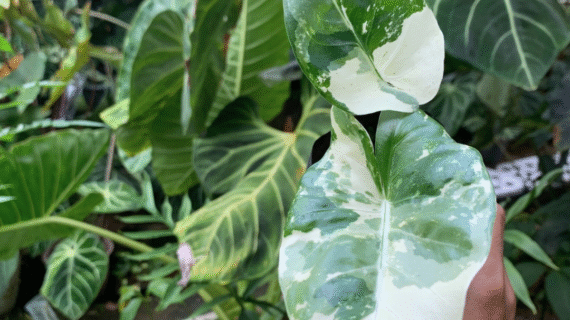
This plant belongs to the family Araceae, one of the most diverse plant families in tropical ecosystems. The species Alocasia macrorrhizos is widely known as Giant Taro, and the variegated form represents a rare mutation or cultivated selection characterized by irregular white, cream, or yellow patterns across the leaves.
Origin and Natural Habitat
The base species originates from Southeast Asia, including Indonesia, Papua New Guinea, and surrounding regions. It thrives in warm, humid environments with abundant rainfall and rich organic soils. The variegated form, however, is rarely found in the wild and is primarily maintained through cultivation.
Botanical Significance
Variegation in Alocasia macrorrhizos variegata is caused by a lack of chlorophyll in parts of the leaf tissue. This not only creates stunning visual contrast but also affects growth patterns, making the plant both more delicate and more desirable among collectors.
Why Alocasia macrorrhizos variegata Is So Special
Rarity and Collector Value
In the world of Rare Houseplants Indonesia, few plants command as much attention as a well-variegated Alocasia macrorrhizos. Each leaf is unique, and stable variegation is difficult to maintain, making high-quality specimens extremely valuable.
Collectors often compare it to other premium selections found in Rare Aroid Plants, but its combination of size and variegation sets it apart. Sourcing from a trusted Indonesian Plant Nursery or Live Plants Exporter Indonesia ensures authenticity and quality.
Unique Morphology
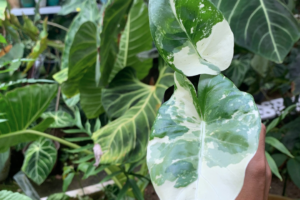
The leaves are massive, heart-shaped, and adorned with unpredictable splashes of white, cream, or yellow. Some leaves may be heavily variegated, while others revert to green, adding an element of surprise with each new growth.
The petioles are thick and upright, supporting foliage that can reach impressive sizes even in cultivation.
Ecological Importance
While the variegated form is mostly cultivated, the base species plays a role in tropical ecosystems by stabilizing soil and maintaining humidity. Its large leaves help regulate microclimates in dense vegetation.
Plant Structure and Growth Pattern
Vegetative Structure
Rhizome System
Unlike some aroids that rely on tubers, Alocasia macrorrhizos variegata grows from a thick rhizome. This structure stores nutrients and allows the plant to produce new shoots over time.
Collectors exploring propagation methods often refer to Tubers Collection categories to understand underground growth systems across aroids.
Petiole and Leaf Development
The petioles are robust and capable of supporting large leaves. Variegation can sometimes weaken the plant’s overall vigor, requiring more attentive care.
Leaf Characteristics
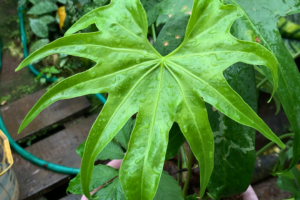
Leaves are broad, glossy, and highly variable in coloration. The balance between green and white tissue directly affects the plant’s ability to photosynthesize.
Generative Structure
Spathe and Spadix
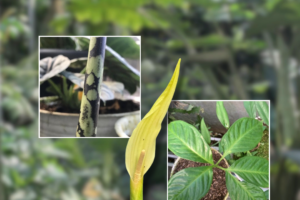
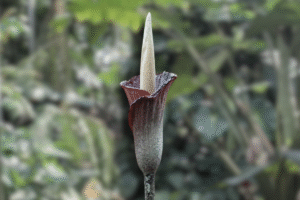
As with all members of Araceae, the plant produces a spathe and spadix during its flowering phase. While not the main attraction, this structure is essential for reproduction.
Flower Zones
The spadix contains:
- Female flowers at the base
- Male flowers above
- A sterile appendix
Pollination is typically insect-driven, though flowering in cultivation is relatively rare.
Lifecycle and Dormancy
The lifecycle includes active growth during warm seasons and slowed growth during cooler or stressful conditions. While not strictly dormant, the plant may pause growth if conditions are suboptimal.
How to Grow Alocasia macrorrhizos variegata
Growing from Seed
Propagation from seed is uncommon for variegated forms, as variegation is not reliably passed on. However, seeds from the species are sometimes available through Tropical Seeds For Sale or Rare Seeds Indonesia suppliers.
The Seeds Collection of specialized nurseries can provide viable starting material, though most collectors prefer vegetative propagation.
Soil Mix (Detailed)
A well-structured soil mix is essential:
- Coco coir or peat for moisture retention
- Orchid bark for aeration
- Perlite or pumice for drainage
- Compost or worm castings for nutrients
This mix ensures roots receive oxygen while retaining adequate moisture.
Watering Needs
Understanding Alocasia macrorrhizos variegata watering needs is critical. The plant prefers consistently moist soil but cannot tolerate waterlogging.
Allow the top layer to dry slightly between waterings. Variegated plants are more sensitive, so consistency is key.
Fertilizer Strategy
Growth Phase
Apply a balanced liquid fertilizer every two to three weeks. Nitrogen supports leaf growth, but avoid overfeeding, which can stress variegated tissue.
Root Development
Phosphorus supports strong root and rhizome growth, especially in younger plants.
Slow Growth Phase
Reduce feeding when growth slows, allowing the plant to stabilize naturally.
Light, Humidity, and Temperature
Light Requirements
For those researching how to grow Alocasia macrorrhizos variegata indoors, bright indirect light is essential. Variegated leaves require more light than fully green plants but must be protected from direct sun.
Humidity
Humidity above 70% is ideal. Low humidity can cause browning, especially in white variegated areas.
Temperature
Maintain temperatures between 22–30°C. Avoid exposure to cold drafts or sudden temperature changes.
Dormancy and Growth Management
While not deeply dormant, the plant may slow growth in less favorable conditions. During this time:
- Reduce watering slightly
- Pause fertilization
- Maintain stable humidity
Once new growth resumes, gradually return to regular care.
Ethical Sourcing and Responsible Collecting
Cultivated vs Wild Plants
Due to its rarity and value, Alocasia macrorrhizos variegata must always be sourced from cultivated stock. Wild collection is not only unethical but also unsustainable.
Reputable Rare Houseplants Indonesia suppliers focus on propagation methods that preserve genetic lines without harming natural populations.
Legal Export and Certification
When purchasing internationally, especially from a Live Plants Exporter Indonesia, ensure proper documentation is provided.
A Phytosanitary Certified Plant Exporter guarantees that the plant is:
- Pest-free
- Legally exported
- Compliant with international standards
Collectors can verify availability and documentation through Contact Us By Email or direct inquiries via WhatsApp Contact.
Supporting Ethical Nurseries
Choosing a trusted Indonesian Plant Nursery ensures plant quality and supports sustainable practices. Ethical growers invest in propagation rather than wild harvesting.
Collectors can browse curated selections through Shop All Plants, where responsibly grown tropical plants are available.
Final Thoughts: A Living Work of Art
Alocasia macrorrhizos variegata is more than just a plant—it is a living canvas. Each leaf tells a different story, shaped by genetics and environment.
For collectors seeking something truly unique, this plant offers both challenge and reward. Its care requires attention, patience, and understanding—but the result is a centerpiece that transforms any space.
As demand for Rare Seeds Indonesia and variegated tropical plants continues to rise, this species remains one of the most sought-after in the world of rare aroids—an unmistakable symbol of botanical luxury and expertise.