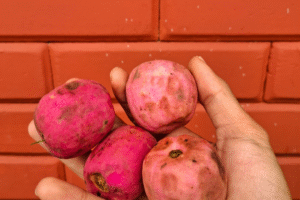
Syzygium polycephalum – The Rare Kupa Fruit of Indonesia
walking through a lush tropical forest in Java or Papua, and you suddenly notice clusters of small, dark-red fruits growing directly on the tree trunks. This unusual sight is not a common one—it belongs to Syzygium polycephalum, better known locally as gowok or kupa fruit.
While many tropical fruits are well-known worldwide—such as rambutan, mangosteen, or durian—kupa fruit remains relatively obscure, even in its native regions. Yet for those who know it, the tree is both a botanical wonder and a cultural treasure.
In this article, we will explore everything about this fascinating species: its botanical characteristics, ecological importance, nutritional benefits, cultivation potential, and why it deserves a place in conservation and horticulture projects.
What is Syzygium polycephalum?
Syzygium polycephalum belongs to the Myrtaceae family, the same group as guava and clove. In Indonesia, people commonly call it gowok or kupa fruit, names that carry cultural and regional identity.
-
Scientific name: Syzygium polycephalum
-
Family: Myrtaceae
-
Common names: Gowok, Kupa
-
Locality: Java, Papua, other parts of Southeast Asia
Its most remarkable feature is how the fruits grow directly from the tree trunk and older branches, a phenomenon known as cauliflory. This makes the tree visually stunning, resembling the jaboticaba of Brazil, but with its own Indonesian charm.
Morphological Characteristics
Tree
-
Medium-sized, evergreen, and thriving in humid environments.
-
Can reach up to 15–20 meters in height.
-
Has a dense canopy with glossy green leaves.
Leaves
-
Lanceolate in shape, bright to dark green.
-
Smooth texture with visible veins.
Flowers
-
Small, white to cream-colored.
-
Often overlooked because they are quickly followed by clusters of fruits.
Fruits
-
Round, 2–3 cm in diameter.
-
Reddish to purplish-black when ripe.
-
Sweet to slightly acidic in flavor, refreshing to eat fresh.
-
Contain a single seed, similar to other Syzygium fruits.
The sight of the fruits clinging to the trunk makes this species incredibly photogenic, perfect for collectors and tropical garden enthusiasts.
Habitat & Distribution
-
Native regions: Java, Papua, and surrounding islands.
-
Wider distribution: Found in Southeast Asian rainforests.
-
Growing conditions:
-
Prefers humid, tropical climates.
-
Thrives in well-drained, fertile soil.
-
Grows best under partial to full sun.
-
Because of deforestation and the rise of commercial agriculture, wild populations of Syzygium polycephalum have become increasingly rare. This makes it not just an exotic plant but also an important subject for conservation.
Benefits of Kupa Fruit
The kupa fruit is not only beautiful but also beneficial.
Nutritional Value
-
Rich in vitamins C and A.
-
Contains antioxidants that help fight free radicals.
-
Provides natural hydration with its juicy flesh.
Traditional Uses
-
Consumed fresh as a snack in rural areas.
-
Used in traditional medicine for digestive health.
-
Believed to improve immune function and vitality.
Culinary Potential
-
Can be eaten fresh like grapes.
-
Processed into jams, syrups, or fermented drinks.
-
Potentially valuable as a niche product in tropical fruit markets.
Cultivation & Economic Potential
How to Cultivate Kupa Fruit
-
Propagation: Typically from seeds or grafting.
-
Planting site: Needs space and good sunlight.
-
Soil: Fertile, moist, but well-drained soil.
-
Care: Regular watering during dry seasons, organic mulching, and occasional pruning.
Economic Value
-
Currently underutilized compared to rambutan or mangosteen.
-
Has strong potential for eco-tourism gardens, botanical collections, and niche fruit markets.
-
Could be promoted as an Indonesian rare fruit with unique appeal.
For plant collectors and tropical fruit lovers, cultivating kupa fruit means preserving a part of Indonesia’s natural heritage.
Comparison with Other Syzygium
| Species | Common Name | Distinguishing Feature | Distribution |
|---|---|---|---|
| Syzygium polycephalum | Gowok / Kupa | Cauliflorous fruit on trunk | Java, Papua |
| Syzygium malaccense | Malay Apple | Larger fruit, pink-red flesh | Widespread in tropics |
| Syzygium aqueum | Water Apple / Jambu Air | Bell-shaped, watery fruit | Southeast Asia |
| Syzygium samarangense | Wax Apple | Crisp, bell-shaped fruit | Widely cultivated |
While others in the Syzygium family are cultivated commercially, Syzygium polycephalum remains a rarity, giving it a special status among rare tropical plants.
Content from Video – The Beauty of Kupa Fruit
In the YouTube video on Javaniska Elflora, viewers can see the astonishing sight of kupa fruits growing along the trunk. This visual is both exotic and captivating—like nature’s jewelry adorning the tree.
The video captures:
-
The glossy, clustered fruits.
-
The contrast of dark red against green bark.
-
How unique it looks compared to more common fruit trees.
For plant enthusiasts, seeing kupa fruit in this form evokes the same wonder as jaboticaba, yet with its own Indonesian identity.
Conservation & Scarcity
Because the tree is rarely cultivated on a large scale, wild populations are under pressure. The spread of modern agriculture and habitat loss contribute to its scarcity.
Conservation steps:
-
Encourage cultivation in home gardens and community orchards.
-
Seed preservation and exchange among collectors.
-
Promote awareness of Indonesian rare fruits through media and education.
By planting and protecting Syzygium polycephalum, we are also preserving biodiversity and cultural heritage.
Conclusion – A Treasure Worth Protecting
Syzygium polycephalum is more than just a fruit tree. It is a symbol of Indonesia’s tropical diversity, a rare gem that deserves recognition alongside more famous fruits. With its cauliflorous beauty, nutritional benefits, and cultural significance, it offers opportunities for conservation, cultivation, and even economic development.
At Javaniska Elflora, we believe in celebrating and protecting rare tropical plants like gowok or kupa fruit. If you are a collector, plant enthusiast, or simply curious about rare fruit trees, this is a species worth knowing—and growing.
Call to Action:
-
Subscribe to our YouTube channel for more stories of exotic plants.
-
Follow Javaniska Elflora on social media for daily plant inspiration.
-
Contact us if you are interested in discussing or sourcing seeds/seedlings of Syzygium polycephalum and other rare tropical species.
Visual Suggestions:
-
Close-up photo of ripe kupa fruit on trunk.
-
Full tree image in natural habitat.
-
Comparison of kupa with other Syzygium fruits.
-
Farmers or collectors holding harvested fruits.